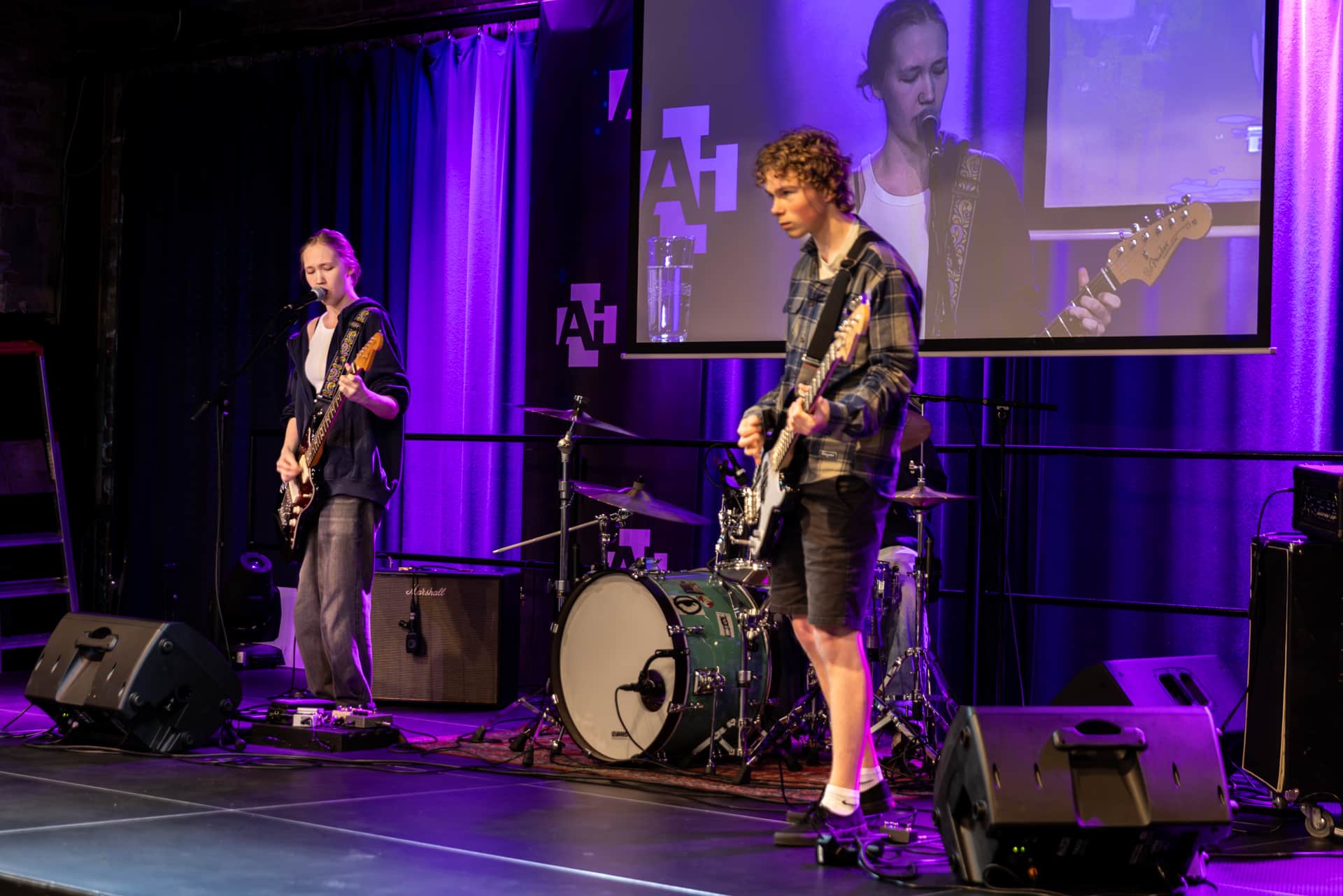
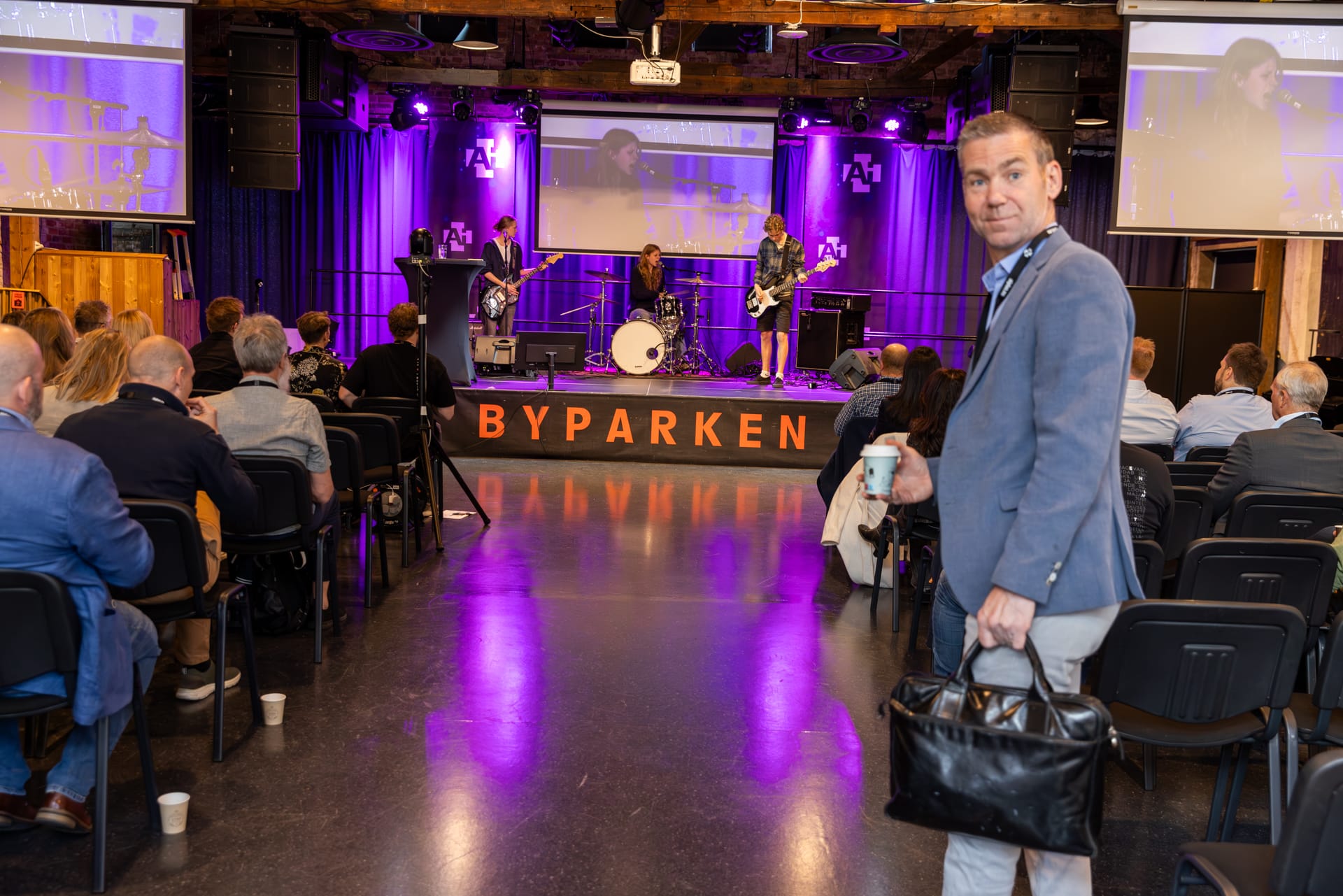
When the punk band Piss Drwr opened AI+ Business at Byparken on Wednesday morning, few people were probably expecting hard-hitting punk rock as the start of an AI conference.
But it likely woke the audience up just as much as the fresh cup of coffee in their hands. The applause in the room certainly suggested that the unexpected opening was a success.
- See also: Photos from AI+ Business
- See also: Photos from AI+ Mesh
- See also: Photos from AI+ Party
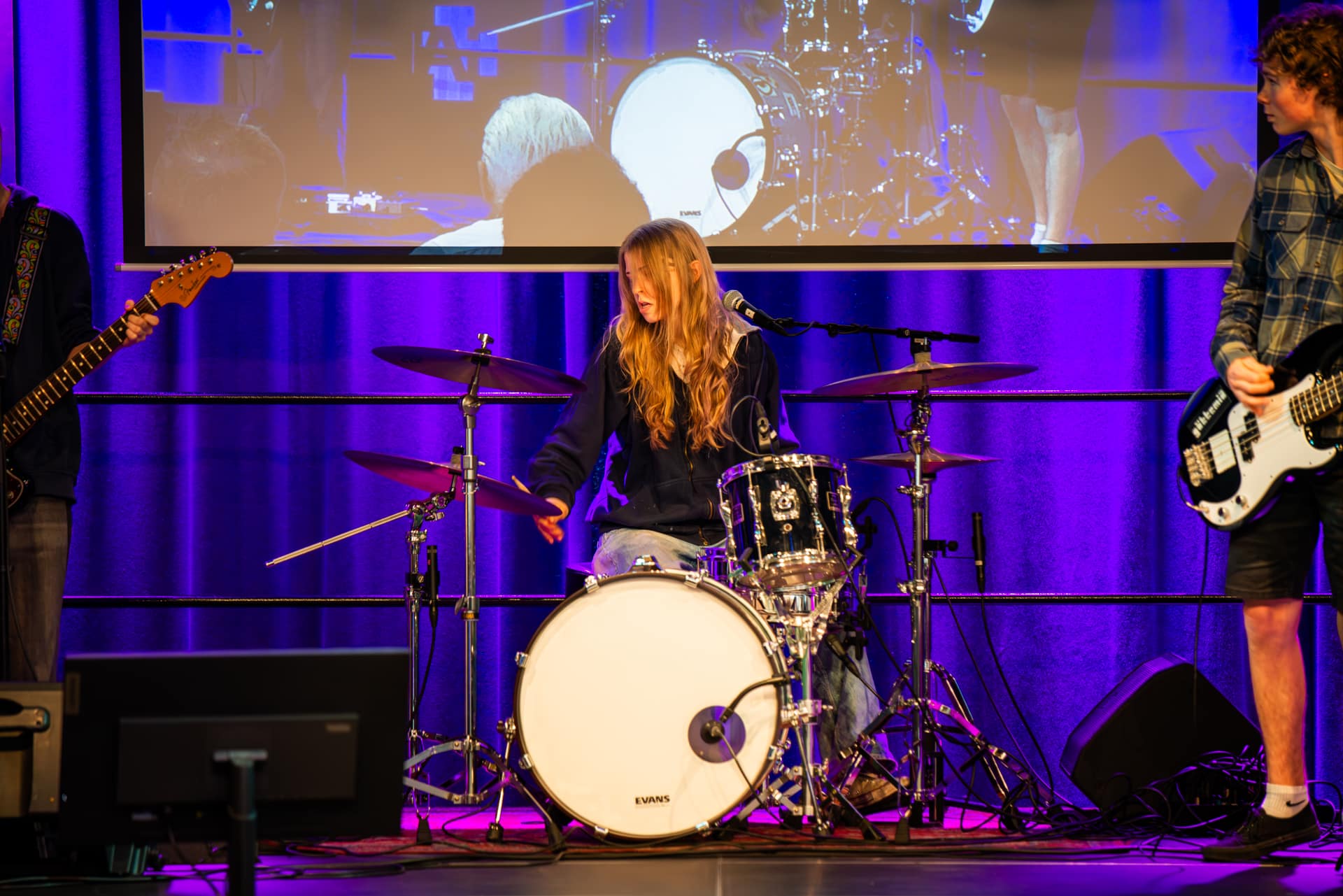
Band members Mina Waleur-Eriksen (18), Emma Midtfjeld (18) and Sivert Elstad (18) all attend the music programme at Porsnes Upper Secondary School in Halden. When they were first asked to perform at AI+, they were unsure what kind of conference it actually was.
“It’s not every day you get asked to play at a conference,” they say with a laugh.
“We hadn’t really heard of AI+ before, but first and foremost we thought it sounded cool.”
At the same time, they admit they were skeptical at first.
“We weren’t sure if this was going to be a really ‘pro-AI’ kind of thing, or if there would be room for more nuanced discussions about what artificial intelligence is actually doing to society,” Mina explains.
Once they understood that the conference also focused on responsible AI use and ethical questions, it felt more comfortable to take part.
“You still need to be able to think for yourself”
For teenagers growing up with artificial intelligence as a natural part of everyday life, their relationship with the technology is complex.
“In school, AI can be a bit frustrating sometimes, because some people use it the wrong way. They generate texts instead of doing the work themselves,” says Emma.
At the same time, they believe AI can also be used in sensible ways.
“For example, you can use it to help create a template for how something should look. That way, you can use AI in school and still learn, without becoming a ‘brainfart’ who can’t think for themselves.”
The trio emphasizes that the problem is not necessarily the technology itself.
“I don’t think we’re skeptical of AI, really. We’re more skeptical of people who use it in stupid ways.”
Concerned about AI-generated music
As young musicians, they are also concerned about how AI affects creative professions and artistic expression.
“Music is artistic. It’s about expressing yourself. That’s why it feels a bit wrong when the ideas come from a computer,” says Sivert.
The band especially points to the challenges surrounding AI-generated music, where voices, expressions and musical concepts can be copied without consent.
“There have been cases where smaller artists have had their music or voices copied and used to generate new songs. Some have even been sued based on material that actually builds on their own style.”
They believe these developments show how important it is to establish clear guidelines and discussions around ownership and the use of AI.
“AI can be a useful tool, but there need to be boundaries and rules for how the technology can be used,” Emma states.
All three agree that conversations about AI are necessary, and the band was given permission by their school to stay and follow the conference until lunch — after that, it was back to the classroom for the three young and talented musicians.
AI+ 2026 was held for the seventh time in Halden this week, bringing together more than 90 speakers and contributors across 31 events over four days. The dates for next year’s edition have already been announced: save the date for 24-29 May 2027.