
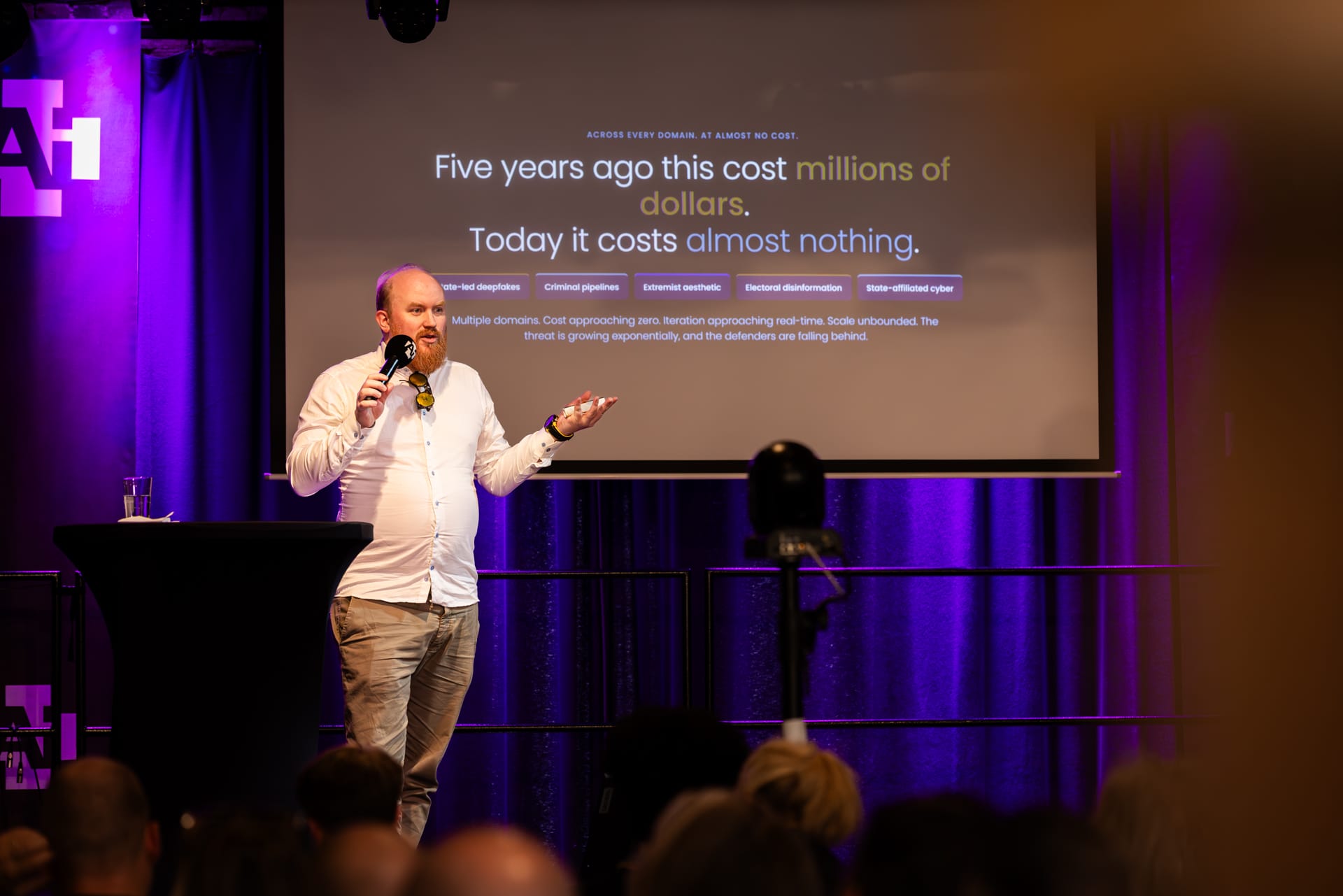
How can artificial intelligence help us understand and respond to today’s most complex security threats?
That was the question Bjørn Ihler brought to the stage at AI+ Business in Halden, where he spoke as part of the session Nordic Trust and Values as a Competitive Advantage.
- Read also: Minister of Digitalisation at AI+: “We Must Combine Speed with Responsible Use”
- Read also: Music Students Shock-Opened AI+ Business: “We’re Not Skeptical of AI, but of How People Use It”
Ihler is the founder and CEO of Revontulet and co-founder and Director of the Khalifa Ihler Institute. He is an internationally recognised expert on counter-terrorism and the prevention of radicalisation into violent extremism. His work focuses on terrorist networks, hybrid threats and the ways in which technology is changing both online and offline security risks.
His engagement in this field is also deeply personal. Ihler is a survivor of the 2011 Utøya attack, and has since dedicated much of his work to understanding and preventing violent extremism.
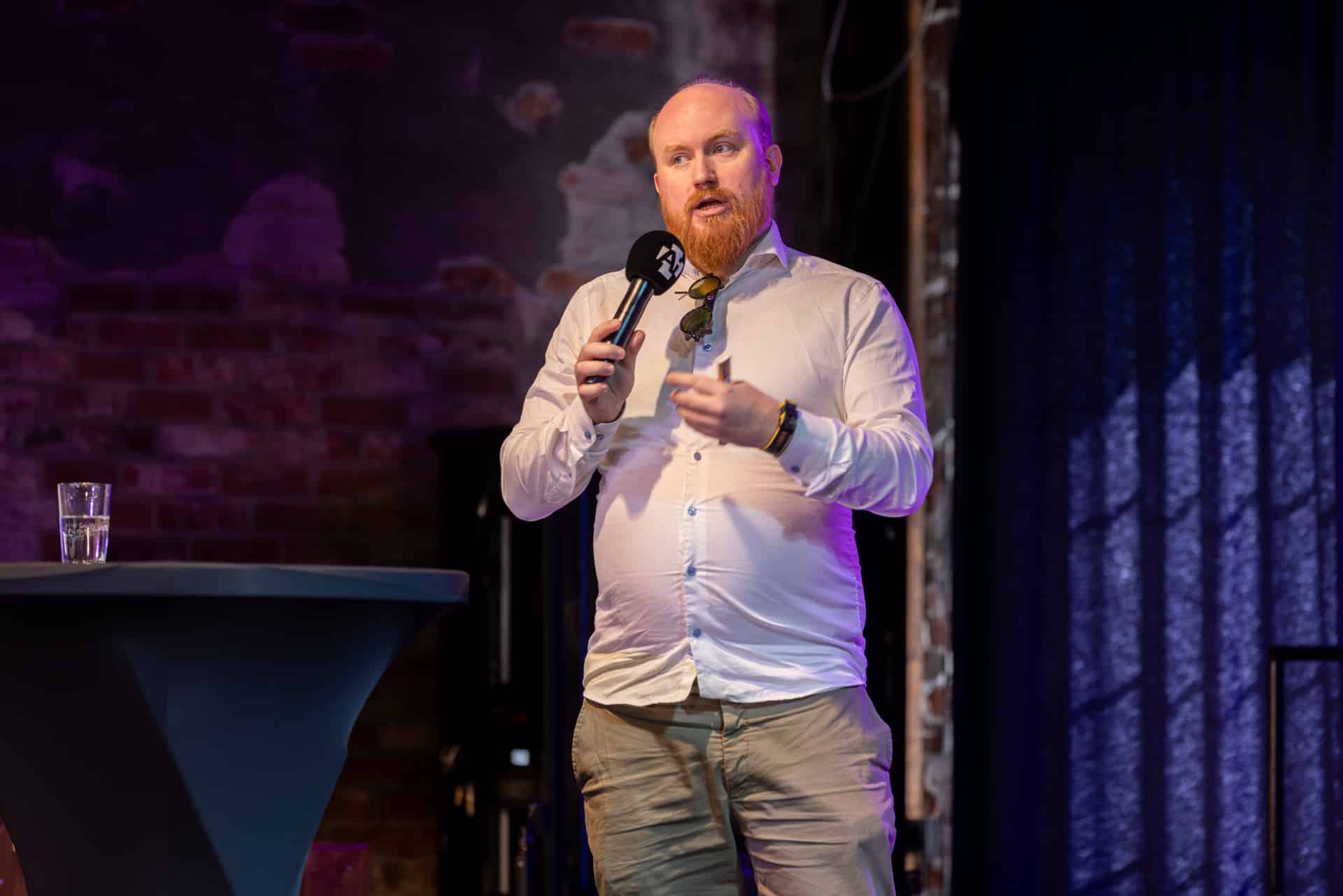
At AI+ Business, Ihler shared how artificial intelligence and expert knowledge can be combined to map threats, understand complex networks and support better decision-making in high-risk environments.
Not wartime, not peacetime
As a supplement to his talk, Ihler has written an article titled Not wartime, not peacetime: building civilian intelligence from Halden.
In the article, he describes how Europe is facing a new and complex threat landscape, where cyber operations, information warfare, extremist movements, organised crime and state-aligned activity increasingly overlap.
- See also: Photos from AI+ Business
“We are not formally at war, but we are clearly no longer at peace,” Ihler writes.
He argues that artificial intelligence is not necessarily creating entirely new forms of harm, but that it is accelerating and amplifying existing threats.
“AI primarily amplifies established behavioural and threat patterns rather than introducing new ones,” he explains.
AI, trust and civilian resilience
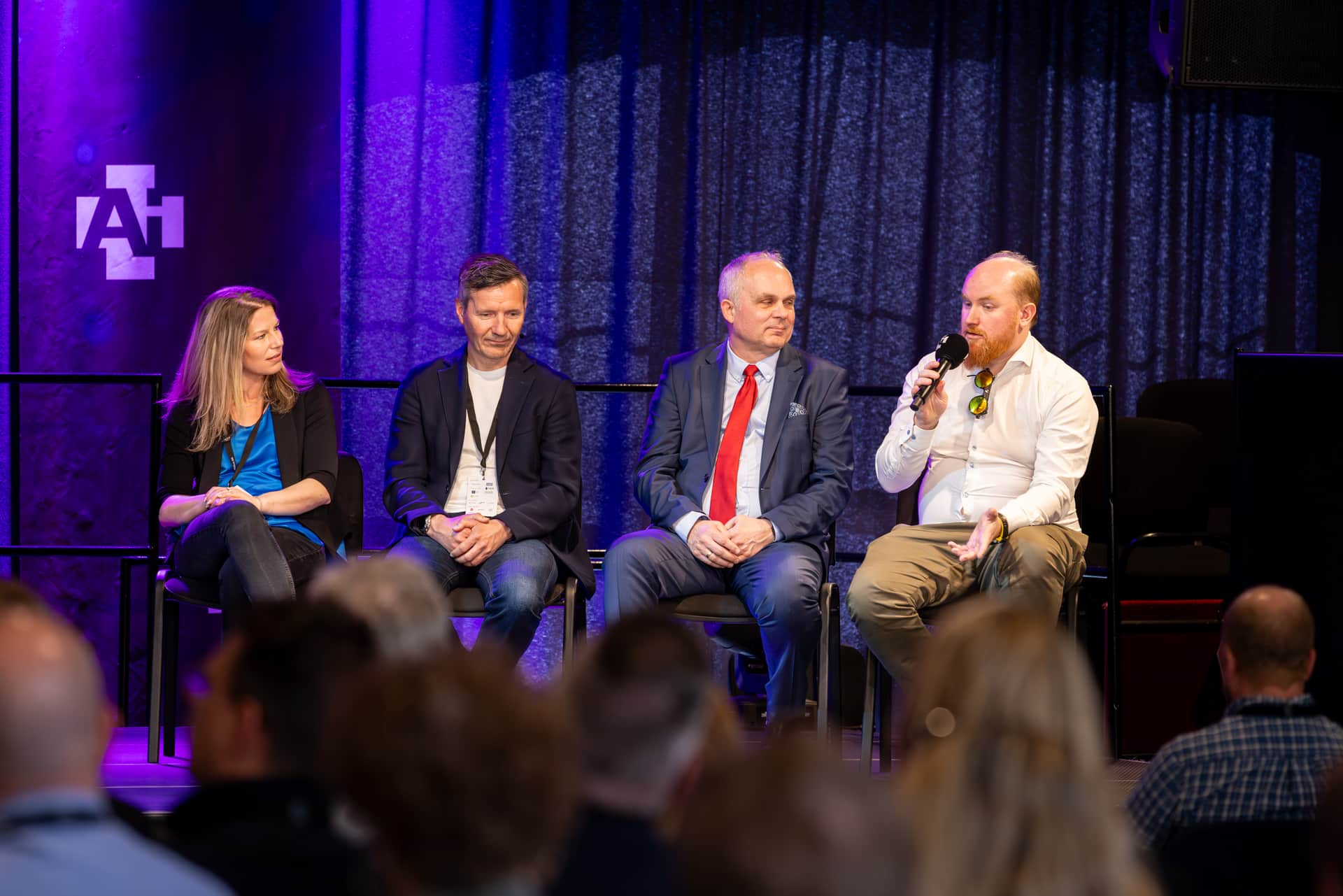
During AI+ Business, Ihler’s contribution was part of a broader discussion on trust, responsibility and the practical use of AI. His perspective added an important security dimension to the programme: How do we build systems that help societies respond faster, without losing accuracy, accountability or democratic control?
In his article, Ihler also presents the thinking behind Revontulet’s work and the development of Cortexia, a civilian intelligence and analysis platform built to support cross-domain threat analysis.
For Ihler, the point is not simply to use AI because it is available. It is to combine AI with deep expertise, clear methodology and responsible decision-making.
“The cost curve benefits both attackers and defenders, provided we operate at the same tempo,” he notes.
Read the full article
Ihler’s full article offers a detailed look at hybrid warfare, AI-enabled influence operations, extremist networks, digital sovereignty and why civilian intelligence capabilities are becoming increasingly important.
- Read the full article: Not wartime, not peacetime: building civilian intelligence from Halden
AI+ 2026 brought together more than 90 speakers and contributors across 31 events in Halden, with trust, responsibility and applied AI as recurring themes throughout the programme.